LOREM IPSUM DOLOR
A Vision in Stone: Building the Co-Cathedral
“Beauty is enhanced by simplicity.”
– Father Charles Maillard, 1918
This belief guided Fr. Maillard’s artistic vision and shaped the harmony between the architecture, artwork, and sacred purpose of the Co-Cathedral.
A Beautiful New Church
In 1912, Gravelbourg’s population was growing. It was time to consider building a larger church than the famous “Maison Blanche” to suit the needs of the religious population. The parish’s request for a new church was authorized by Bishop Mathieu, the first Regina Bishop. He was thrilled at the idea of building a new Temple of God. They decided to construct only the basement for the time being.
The Board of the Parish Trustees held an assembly on February 9th, 1913. Father Magnan was sent to Regina to select an architect to commence the plans for future building. Mr. J.-E. Fortin was selected. On June 15th, 1913, the Parish Trustees decided to sell the chapel house for the sum of $4,000.00 to the District School Board, on the condition that Father Magnan would be allowed to continue to reside there until January 1st, 1914. The excavation of the proposed basement began on June 30th, 1913, on Father Magnan’s property where the Collège Mathieu is presently situated. On May 14th, 1914, the contract for the building was given to Mr. Henri Boisvert, building contractor, for the sum of $11,000.00. The construction of the basement was completed in December at a cost of $18,000.00. The furnace had been installed since the previous September, and the church benches, that were ordered from Paquet and Godbout from Saint Hyacinthe, arrived shortly after the basement was completed. It was used as a basement church until 1917.
During the winter of 1916 – 1917, the question of changing the church site had developed. The Sisters of Jesus and Mary were thinking of building a convent in Gravelbourg. It was very important that the future church and the convent be near each other. During an assembly on March 17th, 1917, the majority of the parishioners was in agreement with changing the site, but only on the understanding that the $18,000.00 used for the construction of the basement be reimbursed.
On October 7th, 1917, Father Charles Maillard arrived in Gravelbourg to replace Father Magnan, who was going to the Ferland Parish, as Pastor of the Saint Philomena (former patron) Parish.
In the meantime, Archbishop Mathieu (Regina was erected into Archdiocese in 1915) was in search of a suitable area to establish a classical and commercial college for the French-speaking population. Where would he build his French college? There was a question of the location either in Gravelbourg or Ponteix. Father Maillard called a general assembly of his parishioners in the Saint Jean Baptiste Hall on December 21st, 1917. He spoke to the people with all his heart and soul, “Our good Sisters of Jesus and Mary are not afraid to undertake a $125,000.00 construction. What are you going to do for your church? The Archbishop wishes to build a college. The people of Ponteix are quite legitimately making him advantageous offers. Are you going to sit back and do nothing?” Father himself recommended to his parishioners that the church be given to the Archbishop, who would then use it for the foundations of his new college, and that a new church be built at the south end of Main Street, where it is presently located. His proposition was unanimously endorsed. Immediately after the meeting, subscription lists were drawn up and sums of money guaranteed.
The following day, after Epiphany, Father Maillard left for the East. He had been commissioned by Archbishop Mathieu to borrow the necessary funds and to find an architect. Mr. J.-E. Fortin, a well-known architect from Montréal, was entrusted with the task of drawing up the plans and of directing the construction of the future church. It was he who had supervised the construction of the Parliament Building in Regina and of Archbishop Mathieu’s beautiful Cathedral in the same city.
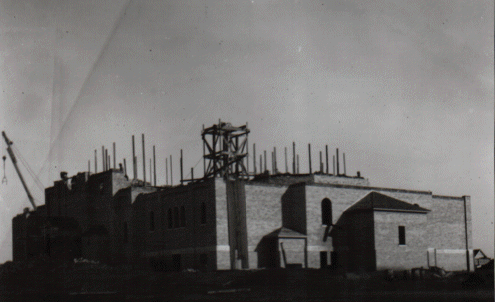
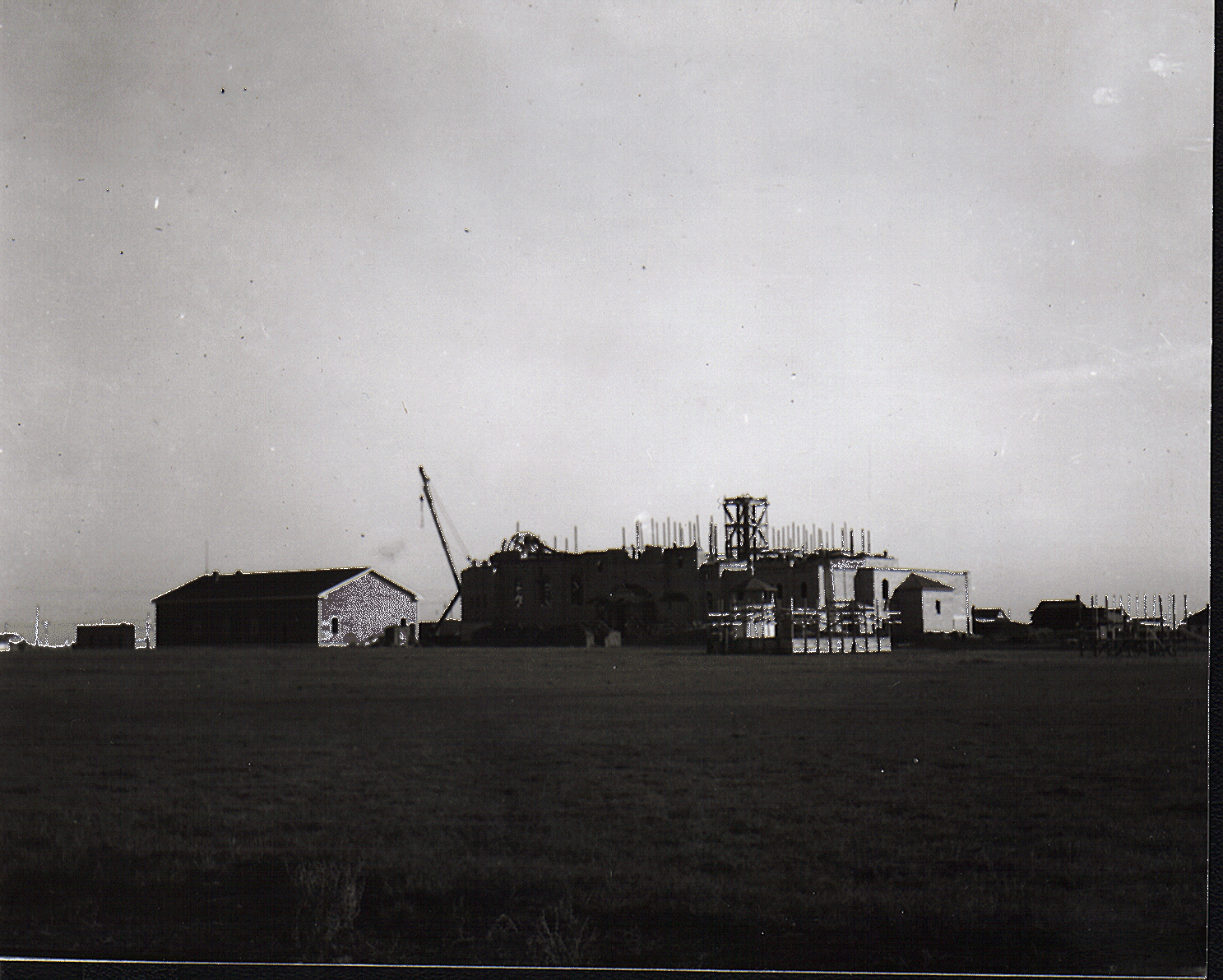
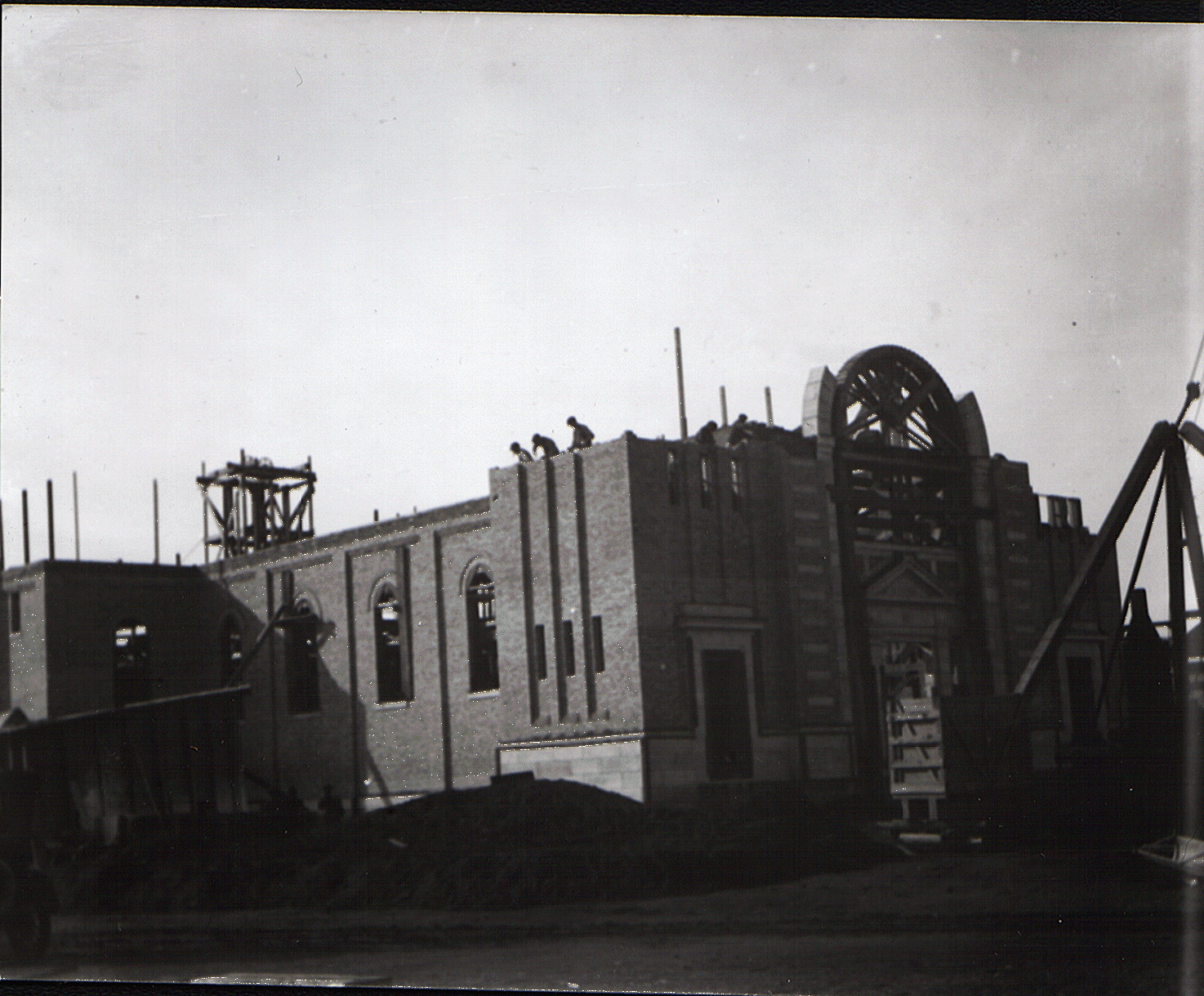
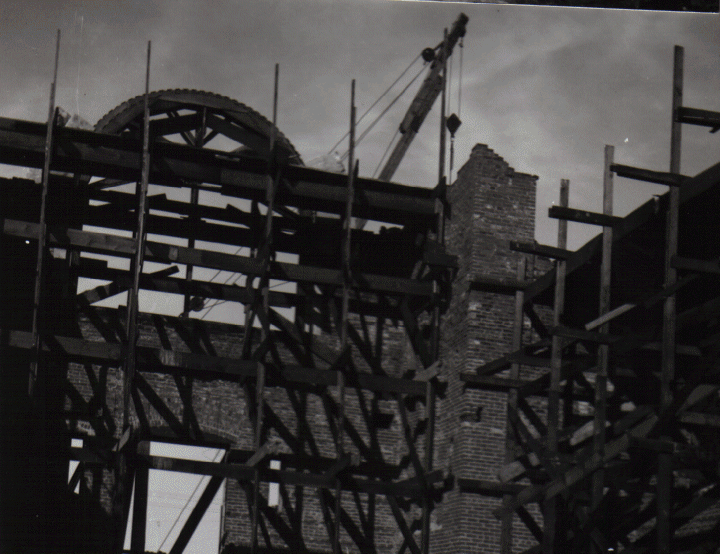
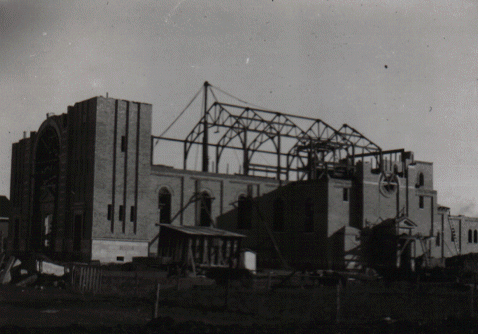
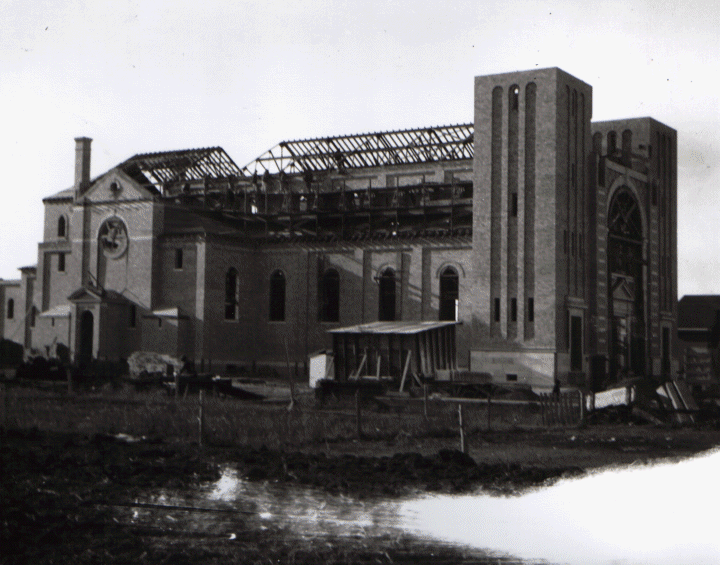
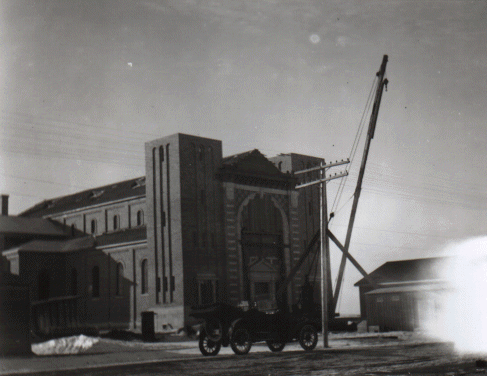
The construction of the church began in June of 1918. “Beauty is enhanced by simplicity” was Father Maillard`s motto while he worked with the architect and the construction workers during the erection and completion of the church. They continued working on the exciting new construction until its completion in October of 1919. The first high mass in the newly built, beautiful church was celebrated by Father Maillard on the first Sunday of October, 1919 on the feast of the Holy Rosary. On November 5th, 1919, Archbishop Mathieu celebrated the solemn blessing of the newly built church of Gravelbourg. He prayed with all his heart that this temple would remain both a house of the Lord and a house of the Catholic faith, firm in its beliefs and traditions.
Construction Photo Gallery
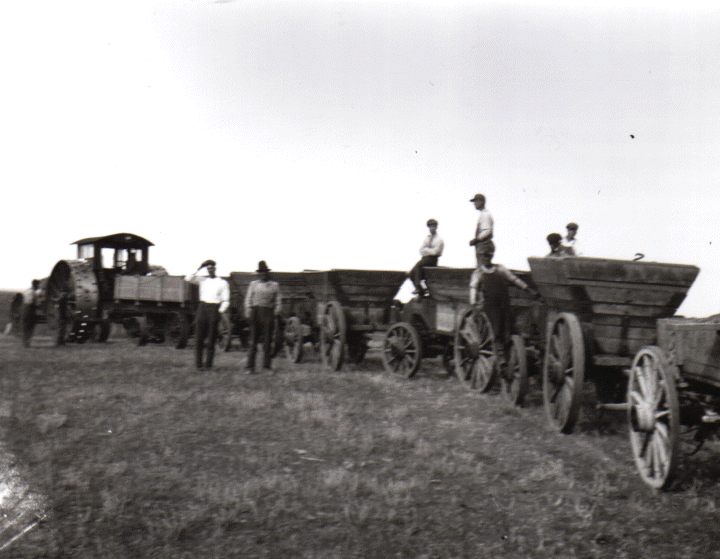
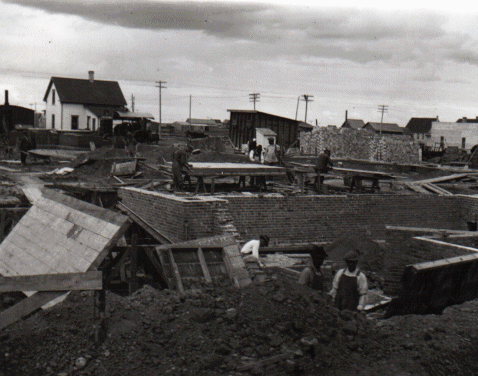
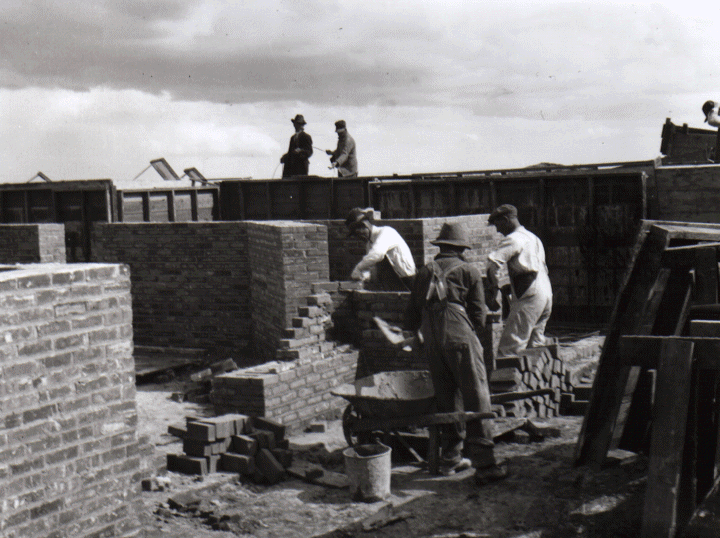
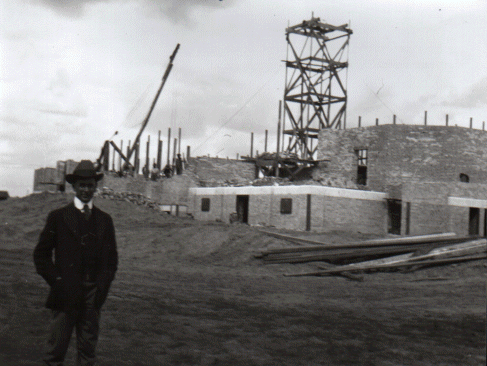
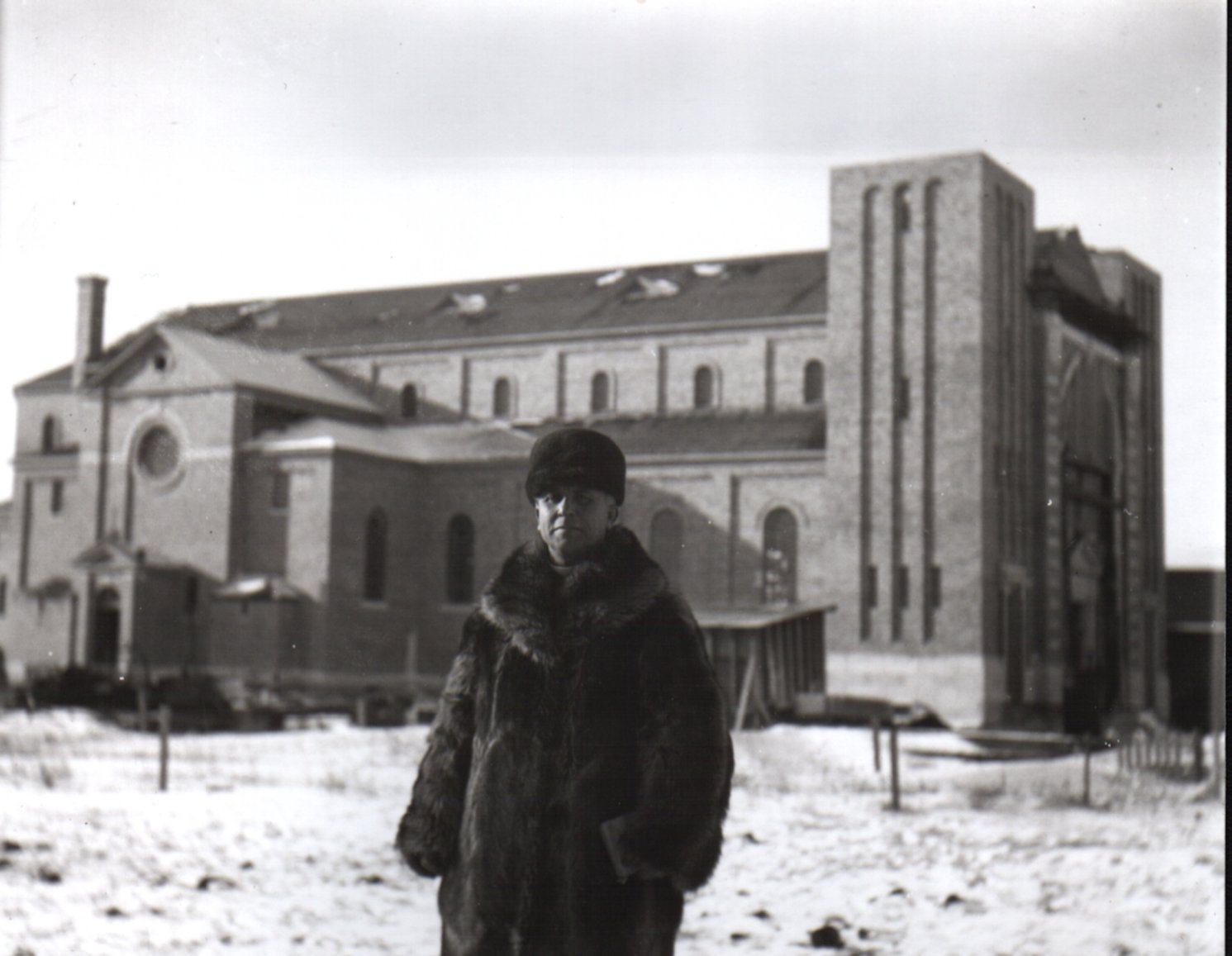
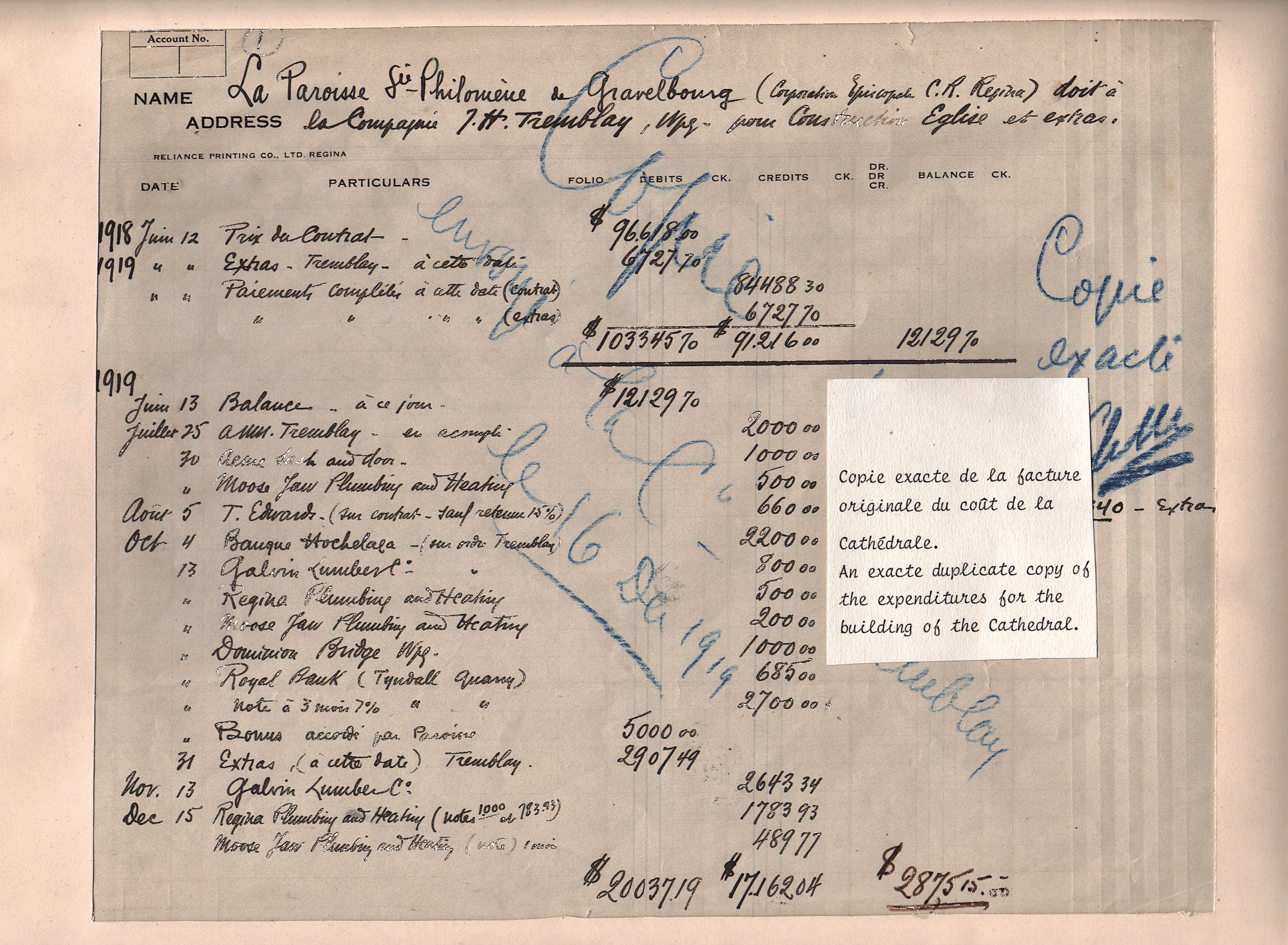
A Glimpse into the Cost of Building
The construction of Our Lady of the Assumption Co-Cathedral was a remarkable undertaking for the community of Gravelbourg. This copy of the original invoice provides a glimpse into the cost and craftsmanship involved in bringing this vision to life. The total cost of construction was $287,515.00.
Thereby Hangs a Tale…
By Janet Legault
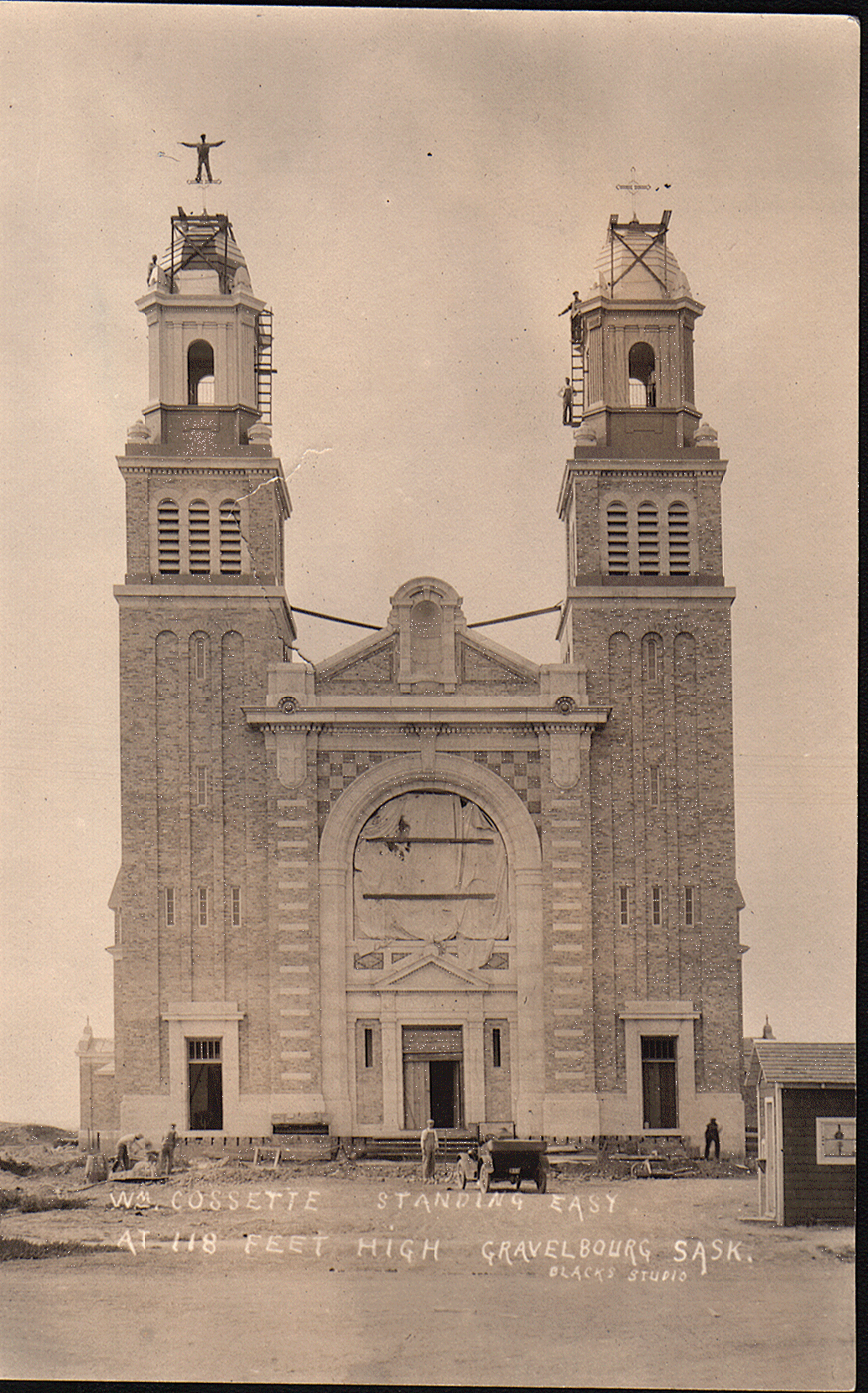
There are fascinating stories to be found in every community. Take Gravelbourg, for instance. Travellers to this small Saskatchewan town are intrigued by the grandeur of its educational and religious buildings. They are greeted by Our Lady of the Assumption Cathedral as visitors to the town have been for almost seventy years; indeed, in 1929 Reverend J. Elie Auclair noted that the public buildings are “superbly dominated by the two square turrets of the church”. Those turrets were built at a cost.
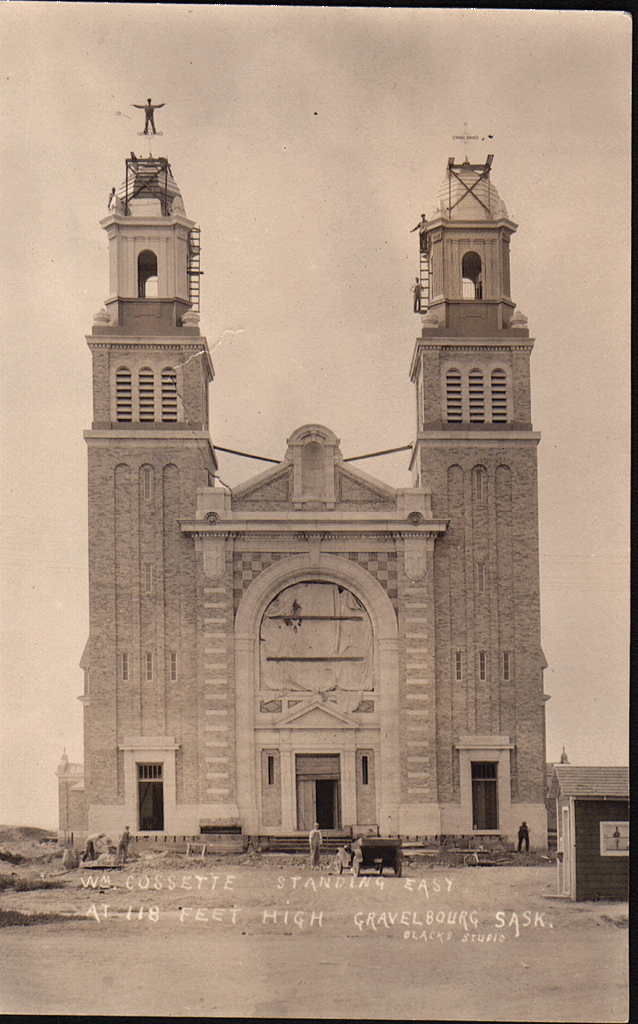
William Cossette stands at the top of the cross, approximately 118 feet above the ground. On the right steeple are an unidentified worker from Eastern Canada and Ovila Michaud.
The accident occurred on a cold November day in 1918. The actual building of the Cathedral had begun in June. The work was progressing quite quickly, and by the Fall of that year the men were working on the bell towers. As far as possible the builder had undertaken to employ local French-Canadians, but on this day Ovila Michaud (34) from Gravelbourg was working with another labourer from “down East”. They filled their wheelbarrow with cement and stepped onto the scaffold, ready to be pulled up to the level on which they were working. It was a trip that had been made several times before, but this time was different. Seventy feet up the exterior of the building, the plank carrying the heavy load broke in half. Without any warning, the two men and their wheelbarrow plunged towards the ground. Michaud hit it first, the wheelbarrow and the other man falling on top of him. Michaud survived; the other man was killed.
Bernadette Levac was seven years old at the time, and the accident happened to her father. Because it was winter, the family had left the farm and were living at the top of what is now Macleods store. The first news that Bernadette, her mother, her brothers and her sisters got was that their father was dead. Then, “Dad was brought home on a stretcher.” Bernadette recalls how much she cried that day when she saw her father’s suffering: “He was full of blood and cement. Two arms were broken, one of his legs was very badly broken, and he had broken ribs. One eye was cut very badly; the other was swollen. His face was cut around the mouth and the flesh was hanging down. He was unconscious.” Bernadette remembers how much her younger sister, Gertrude, was crying.
There had been a lot of snow and there were no roads open to Regina. Not even the train was running, stuck as it was in the hills between Gravelbourg and Moose Jaw. For three days, Ovila stayed at home, tended around the clock by Dr. Soucy, Dr. Lavoie, and three nurses. The five children gave up their beds and slept on the floor so that the doctors and the nurses might rest. Kind neighbours brought the family food; however, there were very few people to comfort Bernadette’s mother, Permilia. During the summer the family lived eight miles from Gravelbourg, and Permilia knew very few people in town. It was a distressing time.
Eventually, the train arrived, and Dr. Soucy accompanied Ovila to Regina. Permilia did not go with them because she could not speak English; in any case, she could not leave her six children. She was not to see her husband for six months. It was a joyous occasion when Ovila was reunited with his family, but it was also a day tinged with sadness. Ovila looked for his youngest daughter, “baby Gertrude” (2) but he did not find her. She had died of pneumonia while he was in the hospital.
Ovila Michaud spent some time in a wheelchair, but he recovered completely. He seem destined, however, to die in an accident. In 1952, at the age of sixty-eight, he was crushed when he was trapped between his tractor and a seeding drill.